25 Mar 2021 | News

Vusi Thembekwayo
By Neil Campher
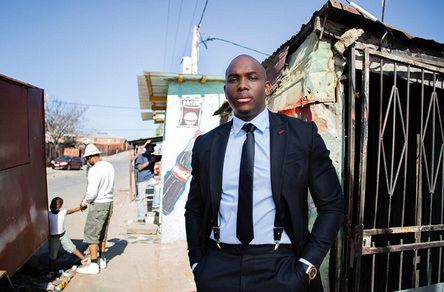
Vusi Thembekwayo, the enigmatic businessman entrepreneur and speaker, challenges many in his business Masterclass on a Tik-Tok video I’ve seen. He takes a historical view of how the “Nats” (Nationalist Party) in the aftermath of their electoral victory in 1948, engineered the Afrikaner nation to move away from the English mercantile system prevalent then in SA. How they basically went about creating an Afrikaner Economic Empowerment model, with companies like Absa and Sanlam/Santam in the banking sector being the recent outcomes thereof. Vusi then asks the pertinent question of what we have done as democratic SA in twenty-six years to build something comparable in scale? I like Vusi. Not only because he is a talented, hardworking and focussed young businessman, but that with his witty arguments, piercing insight, factual no-nonsense approach and township linga-franca humor he leaves his audience mesmerized in deep thought by the implication of his insights.
Of course, there’s much to debate from that standpoint, for example how long it took the Nats to actually build the Afrikaner institutions and how those successes were necessarily achieved under apartheid conditions. That it required a system that brutalised our nation and exploited entire generations to the point of collective PTSD. And one that will take future generation ages to actually address the underlying fundamentals. But Vusi’s central tenant holds firm, and his question begs more introspection: Why is it that as individuals and as a society as a whole, in post-apartheid black SA, that we fail to create and empower true entrepreneurs, instead of tenderpreneurs? Why are we unable to build real businesses, of long-term sustainable growth that serve the real economy? For black business that is surely the central question to be asked?
A version of Vusi’s masterclass discussion I suspect is also playing out in our socio-political realm. Within twenty-six years, the ANC is now deeply embarrassed by its continuous own goals scored at the hand of corrupt leaders fighting over the spoils. The rest of us stand in shock on the side lines as we witness the cringeworthy daily exposés. The DA in turn appears to be competing with the ANC to see who can self-destruct at a faster rate, their “Irish Coffee” strategy that effectively enables white privilege is failing to grow its support base. And the tired noise from the boring and dated slogans of the RET-brigade all speak to the volumes of “nothingness” Vusi refers to in his economic analysis. There is a need for real solutions, to the real socio-economic realities of South Africa, but all the political front is offering is more of the same kneejerk blame games and profiteering that fails to build a real economy.
It is of course unfair to criticise the entire democratic experiment, not all of it was bad or has failed. But on balance, as we consume the daily revelations coming out of the Zondo Commission, and as we see how the corruption pipeline didn’t stop to exploit COVID-19 opportunities, can we say we have used these twenty-six years of democracy to build a better society and economy?
So, what to do when the answers are not simple? I remember being a fourteen-year old in the 80s where as a part of a generation of young activists, and while disgruntled, traumatised and disillusioned by our prospects, we participated willingly and at risk to family and future, in calls for mass protest against apartheid system. Under the multi-coloured banners of the UDF, unions and the South African Youth Congress, with our own local versions in Gqeberha/Kariega (then PE/Uitenhage) being PEYCO, NAYCO, SKYCO etc. we engaged in boycotts and other collective endeavours to bring about real change. In those support networks we learnt skills of mobilisation and institutional basics, what the bills of rights was, the rights of workers, and why these principles should be part of our knowledge regimen to argue for and advocate for real change. As such we played a critical role in ushering in the new democratic dispensation in the nineties that became, albeit briefly, the envy of the world.
Now in 2021, as we approach the latest round of local government elections, we are faced with a new set of complex challenges, a new struggle terrain and a similar mission: we need to eradicate the system of corruption, cronyism and state capture that threatens real change. Factional interests that retard our development, theft of public resources that destroy the foundation necessary for growth, committees that serve vested interests, all hold hostage the potential of our people, and these new oppressors must all go.
We must rediscover our own agency. The simple action of cleaning in front of our own home helps build safe communities. We are the solution we have been waiting for.
It is abundantly clear that we must mobilize ourselves, that we need to find real solutions to the real economy and the real socio-political realm. No-one is coming to save us. And while some of us may not be skilled in politics, like in the 80’s, we contend that you don’t need to be political. The revolutionary step of standing for principle and truth is deeply political act. A necessary one for the process of rebuilding a society that cares and is driven by the cause for equality, social justice and economic opportunity.
And that is the simple call to action of the Abantu Integrity Movement (AIM), we the people of Nelson Mandela Bay must take it upon ourselves to stand for principle and truth, to stand for integrity, and that together we can build this metro to serve the people, not the politicians.
Now is the time for peoples change.
Join us and let’s AIM for Real Change.